Cart
0
The mountains of North Eastern India have a way of holding onto time a little longer than the rest of the world. Growing up there in 70s, in a city nearly landlocked by hills and history. To many, "remote" sounds like a disadvantage; to me, it was a sanctuary.
Life moved to the rhythm of middle-class discipline and the changing seasons. Our days were anchored by academics, but our spirits were set free in the vast, lush-green fields where we played until the sunsets. We didn't have the "hum-drum" of a metropolis, nor did we have the flickering glow of a television—that wouldn’t arrive until the late 80s. Looking back, that delay was a blessing. It forced our thoughts to wander deeper and our imaginations to grow taller, unburdened by the digital noise that would eventually define modern days.
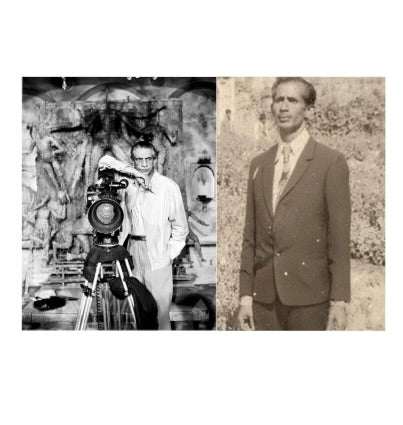
Being Bengali, two things were woven into our DNA: love for football and a hunger for detective novels. It was through those pages that I first met the works of Satyajit Ray, India’s first Oscar winner and the man who taught me how to see. His literature didn't just tell stories; it instilled a restless curiosity that pushed me to look beyond the margins of my textbooks. He taught me that to be creative, one must first learn to observe.
However, the most profound lessons weren't found in books, but in the two sanctuaries my father created. By day, my father was a Professor of Mechanical Engineering, but in his "off" hours, he was meddling with light and wood. I remember the heavy Yashica camera and chemical scent of the darkroom, watching as ghostly negatives transformed into vivid memories right before my eyes.
When he wasn't capturing light, he was shaping wood. He eventually established a carpentry business—a showroom with a sprawling workshop tucked behind it. That workshop became the center of my world. There, I watched skilled artisans take massive, milled logs and, with limited tools but infinite patience, coax sophisticated art out of raw timber.
My father’s hands showed me how engineering and art were two sides of the same coin. He gave me the "real-world" skills of photography and woodworking, while Ray gave me the intellectual hunger to use them.
Today, I don’t repent the strict discipline of that middle-class household or the isolation of my hometown. I am a product of slow afternoons, sawdust-covered floors, and the red glow of a darkroom—a reminder that the best things in life are often made by hand, nurtured by patience, and sparked by a curious mind.
Recent Post